

A Balanced and Natural Appearance in Harmony with Your Facial Features
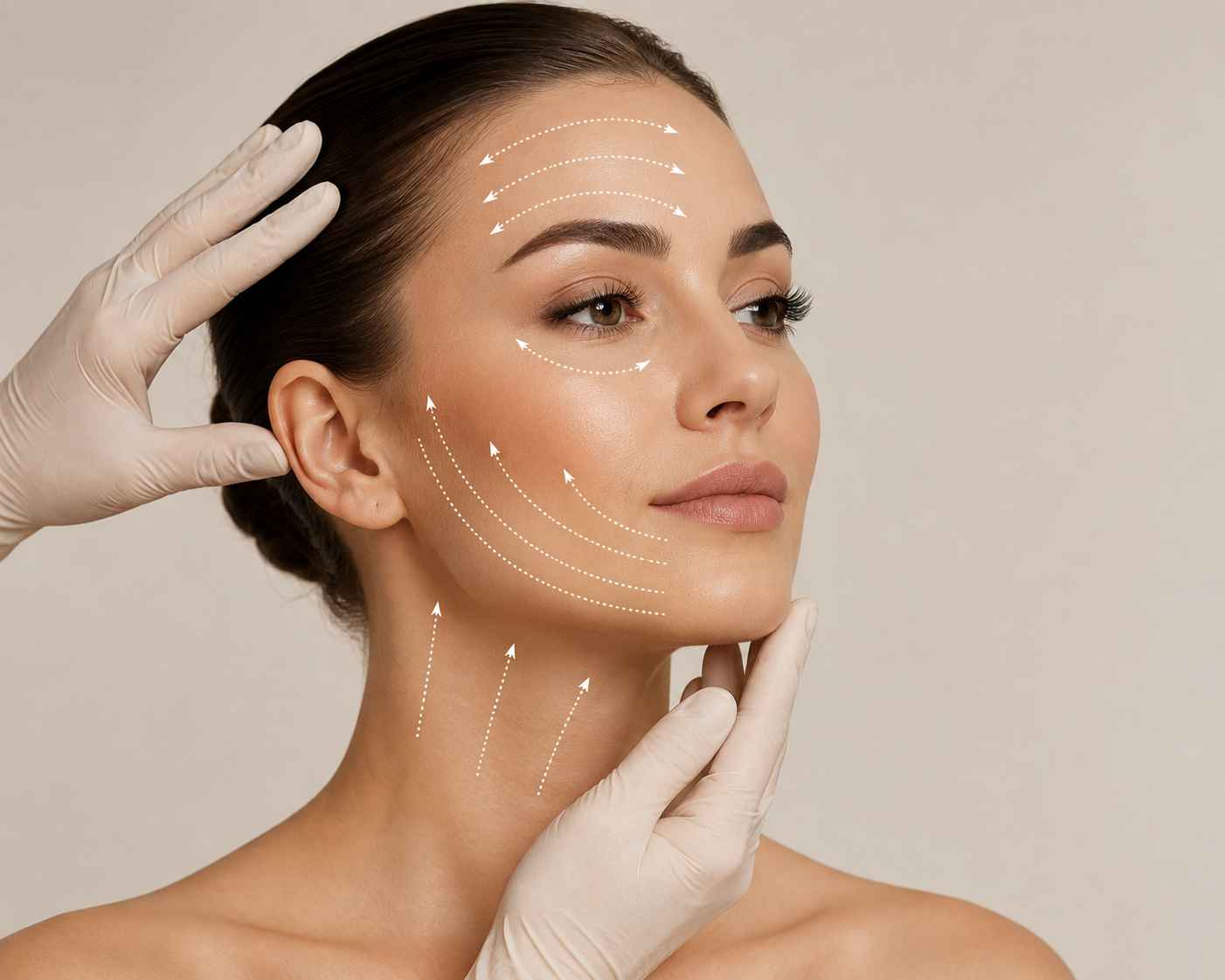
Facial aesthetic surgery includes procedures that address age-related, genetic or anatomical changes in the face and neck while preserving the individual's facial proportions and natural facial character.
Procedures such as facelift and neck lift, eyelid surgery, brow lift, jawline contouring, buccal fat removal, forehead reduction, Fox Eyes and facial feminization may be planned individually or, when appropriate, in combination according to the patient's facial anatomy, needs and expectations.
What Is Facial Aesthetic Surgery?
Facial aesthetic surgery includes surgical procedures that evaluate the anatomical structures of the face and neck, age-related changes and the patient's aesthetic expectations within the overall harmony of the face.
From the forehead and brows to the eye area, midface, jawline and neck, each region has a distinct influence on overall facial expression. For this reason, planning considers the proportions between different facial areas rather than focusing on a single region.
Procedures such as face and neck lift, blepharoplasty, brow lift, jawline aesthetics, bichectomy, forehead reduction, Fox Eyes and facial feminization aesthetics may be planned individually or, when appropriate, in combination according to the patient's needs.
Who May Be a Candidate for Facial Aesthetic Surgery?
Patients who are concerned about specific anatomical features of the face or neck, or changes that have developed over time, may be evaluated for suitable facial aesthetic procedures following a detailed examination.
Patients concerned about laxity or contour changes in the face or neck
Patients with noticeable excess tissue in the upper or lower eyelids
Patients seeking changes in structural features of the brows, forehead or eye area
Patients who would like a more defined jawline or lower-face contour
Patients who want the proportions between different facial areas to be evaluated together
Patients whose general health is suitable for the planned surgery and who have realistic expectations
Every face has a unique anatomical structure. The appropriate approach is determined by evaluating age, skin characteristics, bone structure, soft tissues, facial proportions and individual expectations together.
Planning Process in Facial Aesthetic Surgery
Planning in facial aesthetic surgery goes beyond evaluating a single anatomical region. The upper, middle and lower face, together with the neck contour, are assessed as a whole to create a personalized approach.
Anatomical Facial Analysis
The forehead, brows, eye area, cheeks, jawline, neck, bone structure and soft tissues are evaluated as a whole.
Assessment of Facial Proportions
The proportions between the upper, middle and lower face, as well as structural differences between the right and left sides, are assessed.
Personalized Aesthetic Plan
Based on the assessment, the appropriate treatment areas are determined and procedures are planned either individually or in combination.
Facial Aesthetic Procedures
There is no single surgical approach in facial aesthetic surgery. The appropriate procedure is determined according to facial anatomy, skin and soft-tissue characteristics, age-related changes and individual needs.
Face and Neck Lift
A surgical approach that evaluates laxity, tissue descent and contour changes in the midface, lower face and neck together to create a more balanced facial appearance.
Learn More ↗ 02Neck Lift
A surgical approach that evaluates skin and soft-tissue laxity in the neck together with the jaw-to-neck transition to create a more balanced neck contour.
Learn More ↗ 03Blepharoplasty
Eyelid surgery that evaluates excess skin and tissue in the upper and/or lower eyelids together with the overall anatomy of the eye area.
Learn More ↗ 04Brow Lift
A surgical procedure that evaluates brow position in relation to the forehead and eye area to create a more balanced appearance in the upper face.
Learn More ↗ 05Jawline Aesthetics
An approach that evaluates the lower face, jawline and jaw-to-neck transition together with overall facial proportions to create a more balanced lower-face contour.
Learn More ↗ 06Bichectomy
A procedure that evaluates buccal fat in relation to facial shape and mid-to-lower facial proportions to refine the facial contour.
Learn More ↗ 07Forehead Reduction
A surgical procedure that evaluates the distance between the hairline and brows together with upper-face proportions to reduce forehead height.
Learn More ↗ 08Fox Eyes
An approach that evaluates the outer eye corner, lateral brow and upper-face anatomy together to create a more elevated contour around the eyes.
Learn More ↗ 09Facial Feminization Aesthetics
A personalized approach that evaluates the forehead, brows, midface, chin and lower face as a whole according to the patient's anatomy and aesthetic goals.
Learn More ↗ 10Plastic, Reconstructive, and Aesthetic Surgery
Procedures that address congenital, developmental or acquired differences in tissue and form through plastic, reconstructive and aesthetic surgical approaches.
Learn More ↗How Are Different Areas of the Face Evaluated Together?
For a natural-looking result in facial aesthetic surgery, not only the treatment area but also its relationship with the rest of the face is evaluated.
The forehead, brows and eye area are evaluated together to analyze proportions and expression in the upper face.
The position and volume of the under-eye, cheek and midface tissues, along with their transition to the lower face, are evaluated.
The jawline, lower face, submental area and neck contour are evaluated together as part of the overall facial silhouette.
Can Multiple Facial Aesthetic Procedures Be Performed Together?
Because different facial regions are anatomically closely related, multiple procedures may be considered within the same aesthetic plan in suitable patients.
For example, Face and Neck Lift, Blepharoplasty with Brow Lift, or different facial contouring procedures may be planned as complementary approaches in selected patients.
The suitability of combined procedures is determined by considering the patient's general health, the scope of the planned surgeries and a safe surgical plan.
What Can Be Expected During Recovery?
Recovery after facial aesthetic surgery varies according to the type and extent of the procedure performed.
Swelling, tenderness, tightness or temporary bruising may occur during the early period. Follow-up visits, wound care and the return to daily activities are planned individually according to the surgery performed.
Swelling and tenderness may occur. Keeping the head in the recommended position and following the surgeon's instructions are important.
As swelling and bruising gradually decrease, the return to social and daily activities is planned according to the procedure performed.
As the tissues heal, facial contours become more defined and the results are evaluated during long-term follow-up.
Frequently Asked Questions About Facial Aesthetic Surgery
Which facial aesthetic procedure is suitable for me?
The appropriate procedure is not determined solely by the area of concern. Facial anatomy, skin characteristics, soft tissues, age and expectations are evaluated together to create a personalized plan.
Can a natural appearance be preserved in facial aesthetic surgery?
One of the main goals of surgical planning is to respect the patient's existing facial character and anatomical proportions. The final appearance depends on the procedure performed and the patient's baseline anatomy.
Can multiple procedures be performed at the same time?
In suitable patients, complementary facial aesthetic procedures may be considered within the same surgical plan. Suitability depends on the scope of the procedures and the patient's general health.
Will there be scars after facial aesthetic surgery?
Scarring is expected with procedures that require incisions. Depending on the technique, incision placement may be planned with consideration for natural creases, the hairline or anatomical transition areas.
When will I see the results?
Initial changes may be visible after surgery, but swelling takes time to subside and tissues need time to adapt to their new position. The timing of final assessment varies depending on the surgery performed.
Are the results of facial aesthetic surgery permanent?
Changes achieved through surgery may be long-lasting, although the natural aging process continues. Skin characteristics, lifestyle and changes over time may affect facial appearance.