


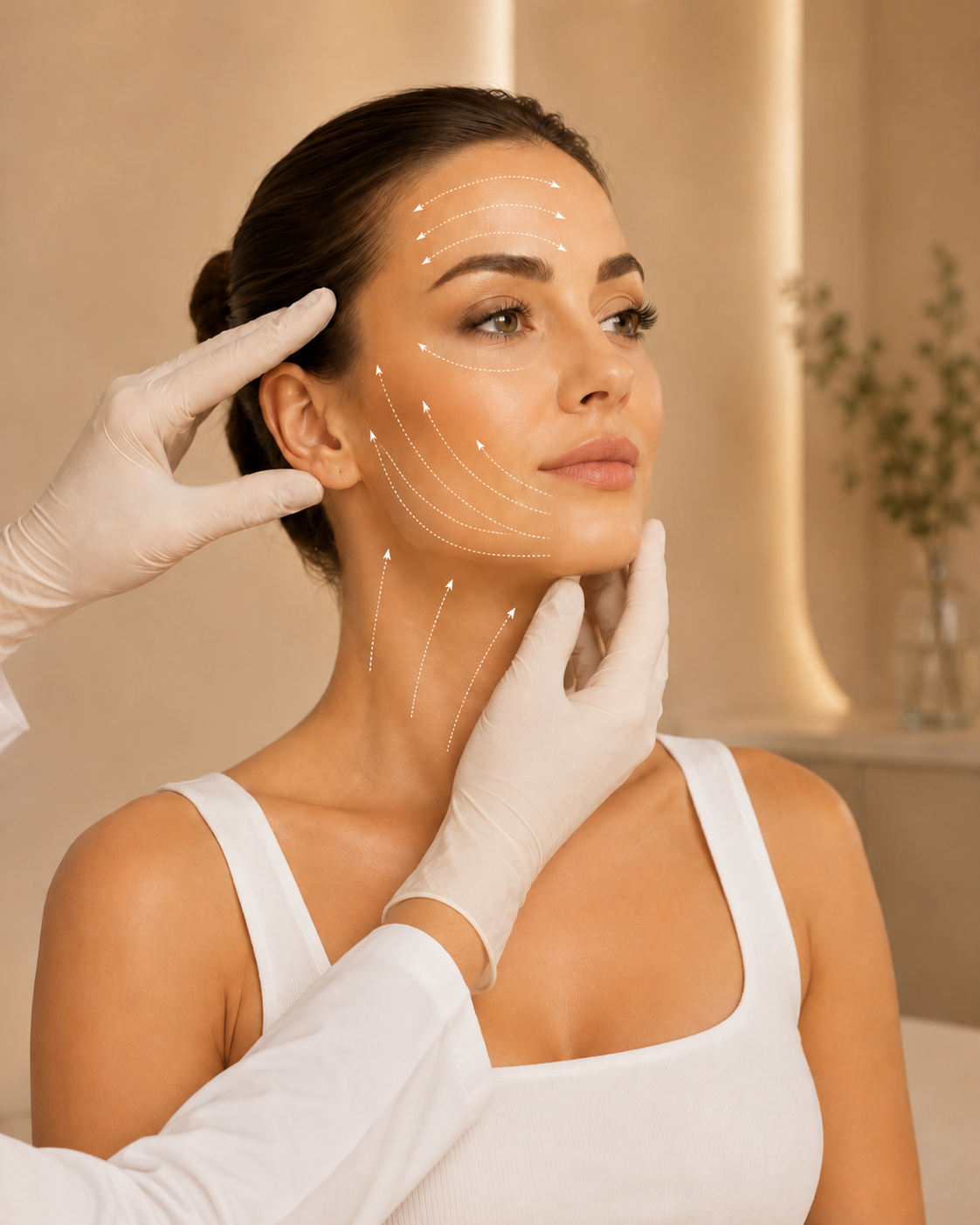
A More Refreshed, Balanced and Natural Face and Neck Contour
Face and neck lift is a surgical rejuvenation approach that evaluates tissue laxity in the face and neck, loss of jawline definition and changes in neck contour associated with the aging process.
Surgical planning does not focus solely on tightening the skin. The position of the midface and cheek tissues, jawline, neck soft tissues, skin elasticity and overall facial anatomy are evaluated together. Depending on individual needs, midface lift, facelift and neck lift procedures may be planned together within the same surgical approach.
What Is Face and Neck Lift?
Face and neck lift is a surgical rejuvenation approach that evaluates tissue laxity in the mid and lower face, loss of jawline definition and changes in neck contour that develop as part of the aging process.
With age, changes occur not only at the skin surface but also in the underlying soft tissues. Descent of the cheek tissues, reduced jawline definition and laxity in the neck can affect the overall appearance of the face.
The aim of surgical planning is not to transform the face into a different appearance, but to preserve the patient's existing facial character while repositioning tissues in harmony with the anatomy and creating a more balanced transition between the face and neck.
Who May Be a Candidate for Face and Neck Lift?
Patients who are concerned about age-related changes in the mid and lower face and the neck may be evaluated for face and neck lift surgery following a detailed examination.
Patients with noticeable tissue laxity in the mid and lower face
Patients who feel that jawline definition has decreased over time
Patients with downward displacement of cheek tissues and changes in facial volume distribution
Patients concerned about skin and soft-tissue laxity in the neck
Patients who would like a more balanced transition between the face and neck
Patients whose general health is suitable for surgery and who have realistic expectations about the results
Eligibility for face and neck lift is not determined by age alone. Skin quality, soft-tissue position, facial anatomy, neck structure and existing signs of aging are evaluated together.
Which Areas Are Evaluated Together?
In face and neck lift planning, different anatomical regions are evaluated together as part of the overall facial structure rather than as isolated areas.
Midface and Cheeks
The position of the cheek tissues, volume distribution in the midface and transitions from the under-eye area to the lower face are evaluated together.
Lower Face
Tissue laxity around the mouth, lower cheek area and jawline is analyzed together with the overall facial contour.
Jawline
Loss of definition and tissue distribution along the jawline, which forms the transition between the lower face and neck, are evaluated.
Neck Area
The skin, subcutaneous tissues, submental area and anatomical structures that influence neck contour are evaluated together.
Preoperative Planning Process
The surgical approach for face and neck lift is personalized according to the patient's facial anatomy and the distribution of signs of aging.
Face and Neck Analysis
The midface, cheeks, lower face, jawline and neck anatomy are evaluated together.
Assessment of Skin and Soft Tissues
Skin elasticity, soft-tissue position, degree of laxity and transitions between different facial areas are analyzed.
Determining the Surgical Approach
The need for procedures such as facelift, midface lift and neck lift, as well as the extent of each procedure, is planned individually.
How Is Face and Neck Lift Planned?
The surgical approach may vary according to individual needs. The primary goal is not simply to remove excess skin, but to reposition the supporting tissues of the face in harmony with the underlying anatomy.
Incision Planning
Depending on the extent of surgery, incisions may be planned with consideration for the hairline, the area around the ears and natural anatomical transitions.
Repositioning of Deeper Tissues
Facial soft tissues and supporting anatomical layers are evaluated and repositioned where necessary.
Jawline and Neck Contour
The lower face, jawline and neck are contoured together to create a more balanced transition between these areas.
Skin Redraping
After the deeper tissues are repositioned, the skin is redraped over the new face and neck contour and any necessary excess skin is removed in a controlled manner.
How Is a Natural Appearance Aimed For?
The goal of face and neck lift surgery is not to make the face appear overly tight or different, but to create a more balanced appearance while preserving the patient's existing facial character and addressing age-related tissue changes.
Planning is performed with the aim of preserving the natural proportions between different areas of the face.
Rather than simply tightening the soft tissues from the surface, the anatomy and natural direction of the tissues are considered.
The transition from the jawline to the neck is planned to remain harmonious with the rest of the face.
Recovery After Face and Neck Lift
Recovery may vary according to the extent of surgery, individual tissue characteristics and the patient's healing rate.
Swelling, tightness, tenderness and temporary bruising may occur in the face and neck during the early period. Follow-up visits, wound care and the return to daily activities are planned individually according to the extent of surgery.
Swelling and tightness may occur in the face and neck. Rest and keeping the head in the recommended position are important.
Swelling and bruising gradually decrease. The return to daily and social activities is planned according to the patient's recovery.
As the tissues adapt to their new positions, the jawline, facial contour and neck contour can be evaluated more clearly.
Results and Long-Term Appearance
After face and neck lift, the aim is to create a more defined jawline, more balanced transitions between facial areas and a more harmonious neck contour.
Because postoperative swelling takes time to resolve completely and tissues need time to adapt to their new positions, the final appearance becomes clearer as the healing process progresses.
Surgery does not stop the aging process. Natural aging continues over time; however, the surgical changes may provide long-lasting improvement in face and neck contour.
Frequently Asked Questions About Face and Neck Lift
Will my face look overly tight after face and neck lift?
The aim of surgical planning is not simply to tighten the skin. The soft tissues and facial anatomy are evaluated together with the goal of preserving the patient's natural facial character.
Should face and neck lift be performed together?
It is not necessary for every patient. However, because the lower face, jawline and neck are anatomically closely related, evaluating these areas together may provide a more balanced plan in some patients.
Can a midface lift be added to the same surgery?
If there is noticeable displacement of the midface tissues, the midface may also be included in the surgical plan. The need for this is determined according to the patient's anatomy.
Will there be scars after surgery?
Scarring is expected with surgical procedures that require incisions. Depending on the technique, incisions may be planned around the hairline, ears and natural anatomical creases. Scar appearance varies according to individual wound-healing characteristics.
When can I return to daily activities?
The timing of return to daily and social activities varies according to the extent of surgery and the patient's healing rate. As swelling and bruising decrease during the first weeks, activity levels are increased gradually.
How long-lasting are the results?
Changes achieved through surgery may be long-lasting. However, the natural aging process continues and new changes in the facial tissues may develop over the years.