

Lifted, Fuller Breasts in Harmony with Your Body Proportions
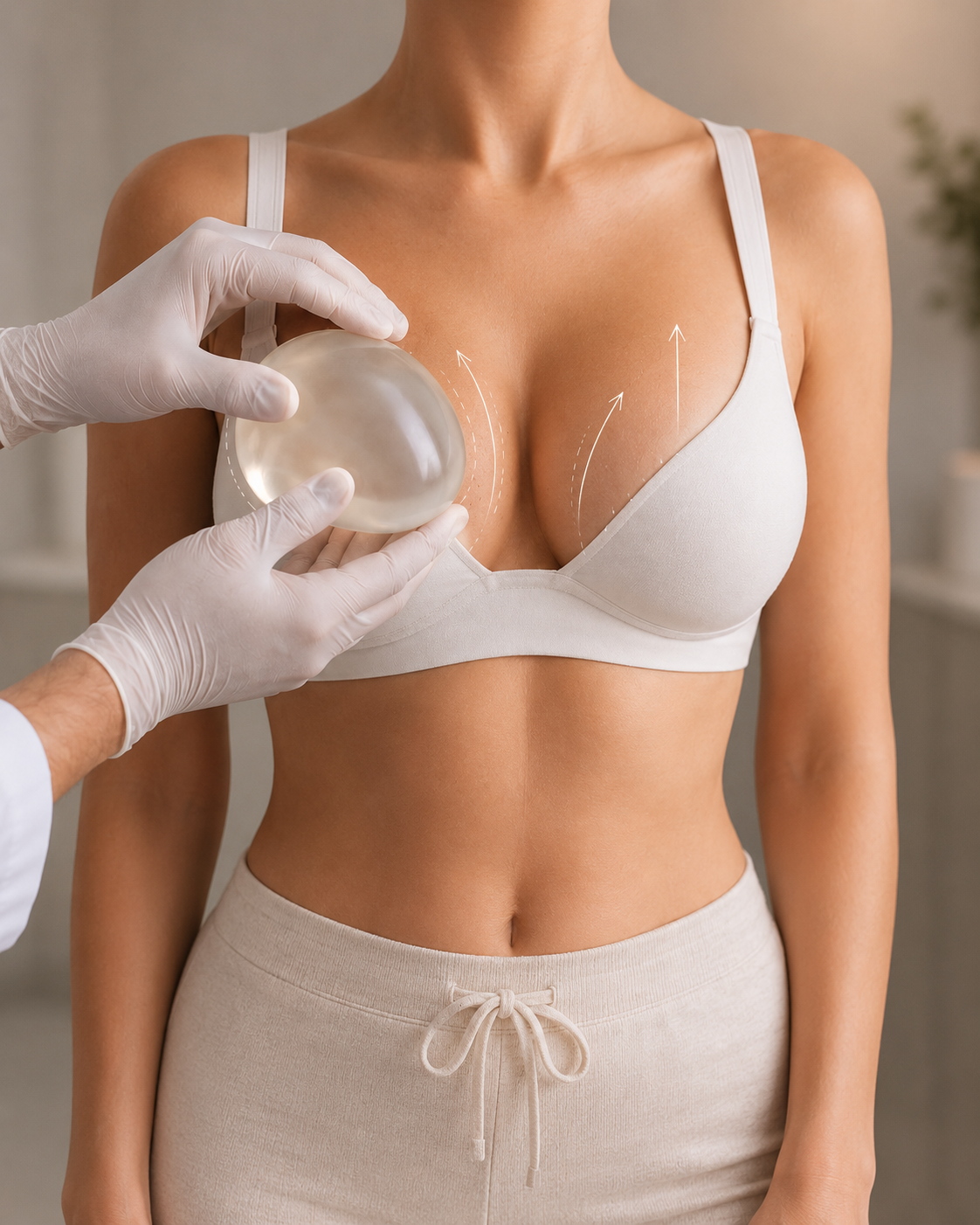
Breast lift with implants is a combined breast surgery approach that addresses breast sagging and volume loss within the same surgical plan.
The aim of this procedure is not only to lift the breasts, but also to enhance upper-pole fullness, reshape the breast contour and create a more balanced décolletage. The type, size and placement of the implant are determined according to the breast tissue, skin quality, degree of sagging and the patient's expectations.
What Is a Breast Lift with Implants?
Breast lift with implants is a combined breast surgery approach that addresses sagging breast tissue while restoring lost or insufficient volume with a breast implant within the same surgical plan.
Pregnancy and breastfeeding, weight fluctuations, aging, genetic characteristics and tissue changes that develop over time can lead to both breast sagging and loss of volume, particularly in the upper pole. In such cases, a breast lift alone or implant placement alone may not be sufficient to achieve the desired breast shape.
In combined surgical planning, the breast tissue is reshaped and the nipple and areola may be repositioned to a more appropriate level, while the selected implant can enhance volume, projection and upper-pole fullness. The surgical approach is personalized according to each patient's anatomy.
Who May Be a Candidate for a Breast Lift with Implants?
Individuals with breast sagging accompanied by volume loss may be evaluated for a breast lift with implants following a detailed examination and medical assessment.
Individuals who have experienced breast volume loss and sagging after pregnancy, breastfeeding or weight fluctuations
Individuals whose breast tissue has descended and who have also experienced loss of fullness in the upper pole
Individuals who desire a more lifted breast shape together with a noticeable increase in volume that remains proportionate to the body
Individuals with downward nipple positioning who also consider their current breast volume insufficient
Individuals with noticeable differences between the breasts in volume, shape or degree of sagging
Individuals whose general health is suitable for surgery and who have realistic expectations regarding the results
The need for combined surgery is not determined solely by breast size. The degree of sagging, existing breast tissue, skin elasticity, nipple position, chest structure and the desired breast shape are evaluated together when creating the surgical plan.
Preoperative Planning Process
Surgical planning for a breast lift with implants is not limited to determining implant size. The current condition of the breast tissue and the extent of the lift are evaluated together with implant selection.
During the examination, breast volume, degree of sagging, excess skin, nipple and areola position, chest width, existing asymmetries and skin characteristics are evaluated. The desired appearance is considered together with the options that are anatomically appropriate.
Assessment of Breast Anatomy and Degree of Sagging
Breast tissue volume, skin elasticity, nipple position, inframammary fold and existing asymmetries are evaluated in detail.
Defining Volume and Shape Expectations
The patient's expectations regarding increased volume, upper-pole fullness, décolletage and overall breast shape are evaluated.
Creating the Combined Surgical Plan
The extent of the lift, implant characteristics, incision plan and method of reshaping the breast tissue are determined together according to the patient's individual anatomy.
Key Considerations in Breast Lift with Implants
When breast lifting and implant placement are planned within the same operation, the two procedures need to be balanced so that they complement each other. The approach used may vary according to each patient's breast anatomy and desired outcome.
Breast Tissue and Lifting
Excess skin is removed as needed, the existing breast tissue is reshaped and the nipple is repositioned to a more appropriate anatomical position.
Implant Size and Profile
Implant selection is not based solely on the desired size. Chest width, existing breast tissue, skin characteristics and desired projection are evaluated together.
Incision and Scar Planning
The incision pattern may vary according to the degree of sagging and the amount of skin that needs to be removed. Periareolar, vertical or inframammary approaches may be considered.
Symmetry and Overall Breast Shape
Differences in volume, nipple position and tissue between the breasts are evaluated with the aim of achieving a balanced appearance that is as harmonious as possible with the patient's body proportions.
What Can Be Expected During Recovery?
Recovery after a breast lift with implants may vary depending on the extent of the lift, the implant plan and the patient's individual healing characteristics.
Swelling, tightness, tenderness and temporary bruising may occur after surgery. Using the medical support bra recommended by the physician, performing regular wound care, avoiding strenuous physical activity and attending follow-up appointments are important.
Rest and controlled movement are prioritized. Tightness and tenderness may occur in the breast area, and the prescribed care and medication instructions should be followed regularly.
Swelling gradually decreases. The time required to return to daily activities may vary from person to person; heavy lifting and movements that strain the upper body are restricted.
As the breast tissue and the area around the implant heal, the new breast shape becomes more defined. Returning to exercise and intensive physical activity is planned gradually under physician supervision.
How Is the Right Implant Selected?
The goal of implant selection is not to use the largest possible implant, but to determine the option that best suits the patient's anatomy, existing breast tissue and desired appearance.
In addition to implant size and profile, chest width, breast base dimensions, tissue thickness, skin elasticity and the new breast shape that will be created after lifting are also considered during surgical planning.
Implant width and projection are evaluated by balancing the desired increase in volume with the patient's body proportions.
Existing breast tissue, breast base width and chest structure are among the key anatomical characteristics that influence implant selection.
Aesthetic goals such as a more natural, fuller or more defined upper-pole appearance are evaluated together with anatomical suitability.
Results and Long-Term Follow-Up
The breast shape achieved after a breast lift with implants continues to be affected over the long term by natural processes such as aging, gravity, pregnancy and significant weight changes.
During regular follow-up visits, breast tissue condition, scar healing, breast shape and implant-related findings are evaluated together. The follow-up plan is determined according to the patient's individual characteristics and the surgical technique used.
Frequently Asked Questions About Breast Lift with Implants
Can a breast lift with implants affect breastfeeding?
Breastfeeding function may be affected by the surgical technique used, the structure of the breast tissue and the extent of the required adjustments. Patients who are planning future pregnancies or breastfeeding should discuss this with their physician during the preoperative assessment.
Will there be scars after surgery?
Because breast lifting requires surgical incisions, scarring is expected. The location and length of the scars may vary according to the degree of sagging and the technique used. Their appearance may change over time depending on individual wound-healing characteristics.
How long do the results last?
The breast shape achieved through surgery may be maintained for a long time; however, aging, gravity, pregnancy, breastfeeding and significant weight changes may affect the appearance of the breast tissue again over time.
Can I choose the size and type of implant myself?
The patient's desired appearance is an important part of surgical planning; however, implant selection is not based solely on personal preference. Chest measurements, existing breast tissue, skin characteristics and the breast shape to be created after lifting are evaluated together to determine the appropriate option.
Is an implant necessary for every case of breast sagging?
No. In individuals with sufficient breast volume whose primary concern is sagging, breast lifting alone may be considered. The need for an implant is determined individually according to volume requirements and the desired breast shape.