

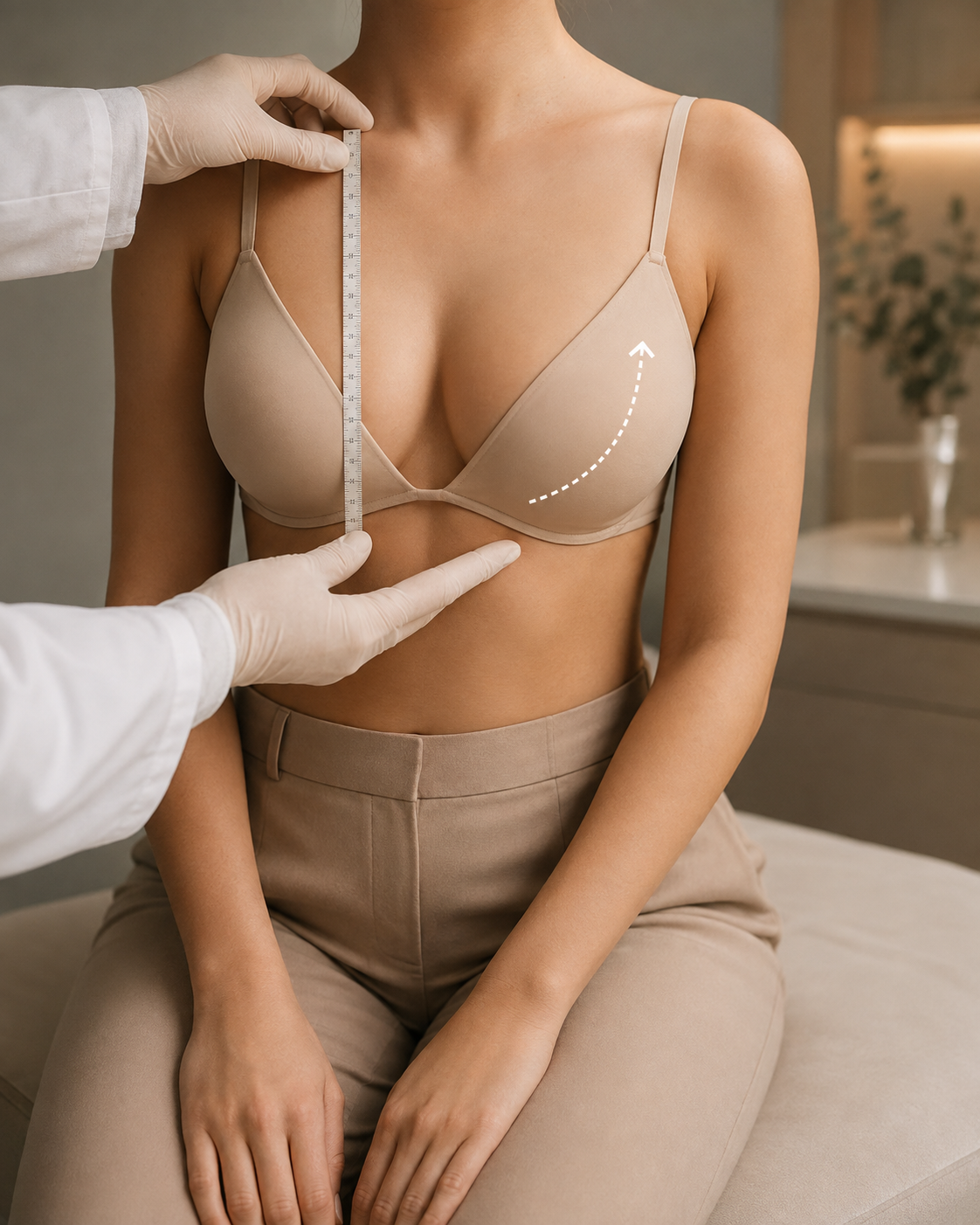
Lifted, Balanced Breasts in Harmony with Your Body Proportions
Breast lifting, or mastopexy, is a surgical procedure planned to reshape breasts that have lost their form due to factors such as aging, pregnancy, breastfeeding, weight fluctuations and gravity, and to reposition them to a more lifted position.
Each patient's breast anatomy, degree of sagging, skin elasticity, existing breast volume and expectations are different. Therefore, surgical planning is personalized based on the removal of excess skin, reshaping of the breast tissue and adjustment of the nipple position in harmony with the patient's body proportions.
What Is Breast Lifting?
Breast lifting, or mastopexy, is a surgical procedure planned to reshape sagging breast tissue, remove excess skin and reposition the nipple and areola to a more appropriate position.
Aging, pregnancy and breastfeeding, weight fluctuations, genetic characteristics and the effects of gravity can cause breast tissue to loosen and lose its shape over time. The primary aim of breast lifting surgery is not to directly increase breast volume, but to reshape the existing tissue into a more balanced, lifted form that is in harmony with the patient's body proportions.
Surgical planning is not the same for every patient. The degree of sagging, skin elasticity, existing breast volume, nipple position, areolar characteristics and the patient's expectations are evaluated together to determine a personalized approach.
Who May Be a Candidate for Breast Lifting?
Individuals with sagging, looseness or changes in breast position may be evaluated for mastopexy following a detailed examination and medical assessment.
Individuals who have developed noticeable breast sagging after aging, pregnancy, breastfeeding or weight fluctuations
Individuals whose nipple and areola point downward or are positioned below the inframammary fold
Individuals with loose breast skin, loss of elasticity or widening around the areola
Individuals with noticeable asymmetry between the breasts in terms of the degree of sagging or nipple position
Individuals who wish to achieve a more lifted and firmer breast shape while preserving their existing breast volume
Individuals whose general health is suitable for surgery and who have realistic expectations regarding the results
Suitability for breast lifting is determined after a physician's examination by evaluating general health, breast anatomy, degree of sagging, skin characteristics, future pregnancy plans and individual expectations together.
Preoperative Planning Process
When planning breast lifting surgery, not only the degree of sagging but also breast volume, skin quality, nipple position and body proportions are evaluated together.
During the initial consultation, the patient's current breast anatomy and expectations are evaluated in detail. The incision pattern, amount of skin to be removed, method of reshaping the breast tissue and whether additional volume is needed are planned individually.
Examination and Assessment of Breast Anatomy
The degree of sagging, breast volume, skin elasticity, nipple and areola position, inframammary fold and existing asymmetries are evaluated.
Defining Expectations and the Desired Shape
Whether the patient desires a more lifted, firmer or different appearance in terms of volume is discussed, and the compatibility between expectations and surgically achievable results is evaluated.
Creating a Personalized Surgical Plan
The incision pattern, reshaping of the breast tissue, nipple positioning and, when necessary, the need for additional volume or reduction are planned according to the patient's individual anatomy.
Surgical Approaches Considered in Breast Lifting
The surgical approach used for breast lifting is not the same for every patient. The incision pattern and method of tissue reshaping are determined according to the degree of sagging, excess skin, breast volume and the desired outcome.
Periareolar Approach
In suitable patients with limited sagging, the incision may be planned only around the areola. The suitability of this approach is evaluated according to breast anatomy and the amount of skin that needs to be removed.
Vertical – Lollipop Approach
The incision begins around the areola and extends vertically toward the inframammary fold. In cases of moderate sagging, this approach may allow reshaping of the breast tissue and removal of excess skin.
Inverted-T – Anchor Approach
In cases with more advanced sagging and significant excess skin, an additional incision extending along the inframammary fold may be planned together with the periareolar and vertical incisions.
Planning According to Breast Volume
If there is loss of breast volume or a desire for additional volume, breast lifting may be considered together with breast augmentation in suitable patients; when excess volume and weight are present, it may be considered together with breast reduction.
What Can Be Expected During Recovery?
Recovery after breast lifting may vary depending on the surgical technique used, the extent of the procedure and the patient's individual healing characteristics.
Swelling, tenderness, tightness and temporary bruising may occur after surgery. Using the medical support bra recommended by the physician, performing regular wound care and attending follow-up appointments are important for a healthy recovery process.
Rest is a priority. Swelling and tenderness may occur, and prescribed medications and care instructions should be followed regularly.
Swelling gradually decreases. The time required to return to daily life varies from person to person; heavy lifting and movements that strain the upper body should be avoided.
As the breast tissues heal, the new shape becomes more defined. Returning to exercise and more intensive physical activities is planned gradually according to the physician's assessment.
Longevity of Results and Long-Term Follow-Up
The breast shape achieved with breast lifting may be maintained for a long time; however, breast tissue continues to be affected by natural processes such as aging, gravity, pregnancy and significant weight fluctuations.
The appearance of surgical scars changes over time and generally becomes less noticeable as the scars mature. Their final appearance may vary depending on the surgical technique used, skin characteristics and individual wound-healing properties.
Maintaining a stable weight and healthy lifestyle habits may help preserve the breast shape achieved through surgery over the long term.
Future pregnancies, breastfeeding or significant weight changes may cause the breast skin and tissue to loosen again.
Healing progress, breast shape and surgical scars are evaluated during scheduled follow-up visits, and personalized care recommendations may be updated throughout this process.
Frequently Asked Questions About Breast Lifting
Can breast lifting affect breastfeeding?
The surgical technique used for breast lifting, the structure of the breast tissue and the extent of the planned adjustments are important in terms of breastfeeding function. Patients who are planning future pregnancies or breastfeeding should discuss this with their physician during the consultation.
Will there be scars after breast lifting surgery?
Scarring is expected with any procedure that requires surgical incisions. The location and length of the scars vary according to the technique used. Scars may mature and become less noticeable over time; however, individual wound-healing characteristics affect the final appearance.
Does breast lifting increase breast volume?
The primary aim of mastopexy is not to increase breast volume, but to reshape the existing breast tissue to create a more lifted and firmer form. If additional volume is desired, breast augmentation options may also be considered in suitable patients.
How long do breast lifting results last?
The result may be maintained for a long time; however, aging, gravity, pregnancy, breastfeeding and significant weight changes may affect the appearance of the breast tissue again over time.
Can breast lifting be combined with other procedures?
In suitable patients, breast lifting may be considered together with breast augmentation when additional volume is needed, or with breast reduction when excess breast tissue is present. The suitability of combined procedures is determined individually after an examination.