

Localized Contouring for More Balanced and Proportionate Body Lines
Liposuction is a surgical procedure that reduces localized fat deposits resistant to diet and exercise to create more balanced body contours.
It is not a weight-loss method. Areas such as the abdomen, waist, hips, back, arms, thighs, knees or under the chin are treated according to the patient’s anatomy, skin characteristics and overall body proportions.
What Is Liposuction?
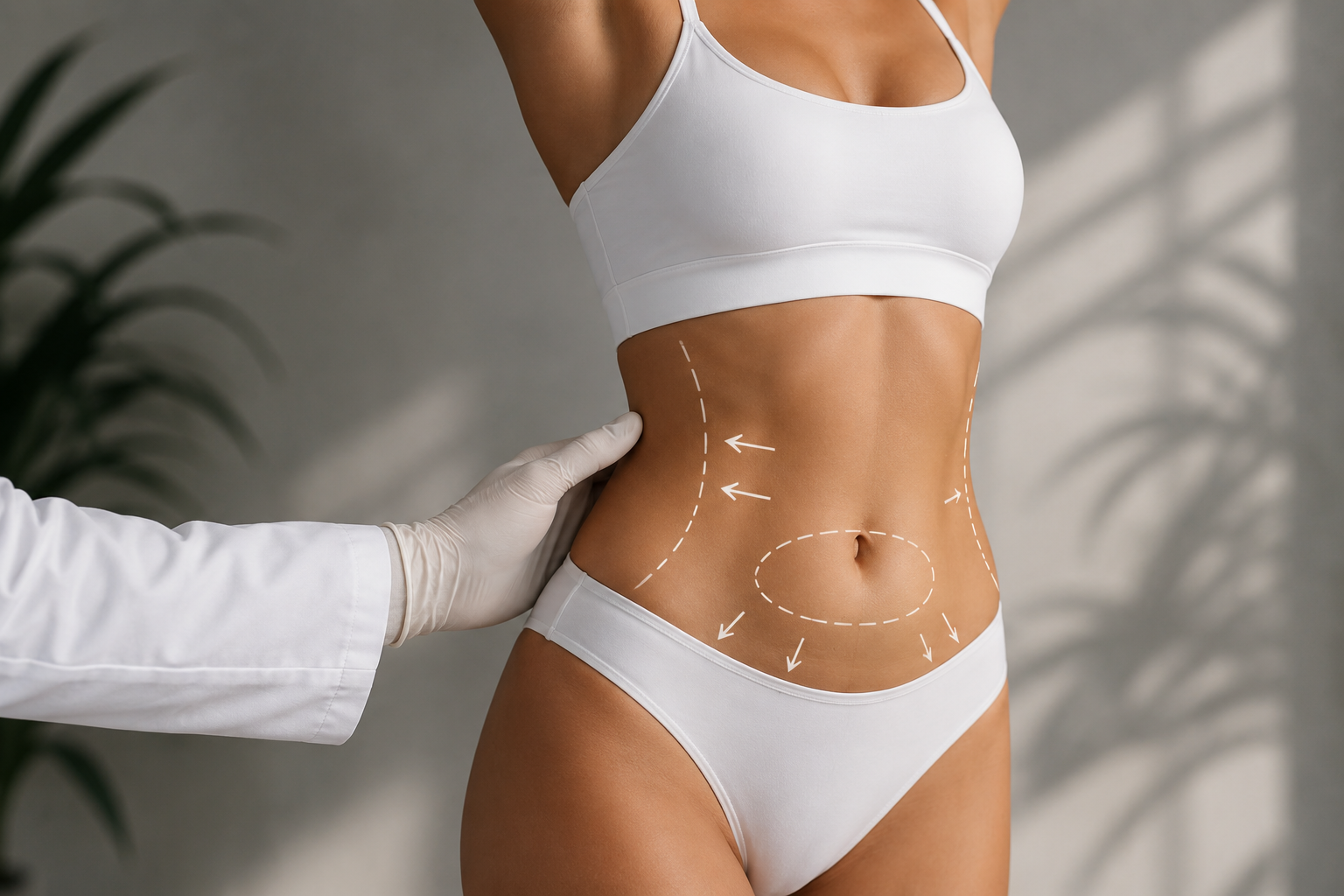
Liposuction is a surgical body contouring procedure used to selectively reduce localized fat deposits in areas such as the abdomen, waist, hips, back, arms, thighs, knees or under the chin and reshape body contours.
The aim is not to achieve overall weight loss, but to reduce fat deposits that create disproportion in specific areas and produce smoother, more balanced transitions with the surrounding tissues.
Planning considers not only the amount of fat to be removed, but also the patient's existing anatomy, skin elasticity, fat distribution and the proportions between different areas of the body.
Who May Be a Candidate for Liposuction?
Individuals who are concerned about localized fat deposits that persist despite diet and exercise may be evaluated for liposuction following a detailed assessment.
Individuals with localized fat deposits that persist despite diet and exercise
Individuals with relatively stable body weight but disproportionate fat distribution in specific areas
Individuals whose skin elasticity is sufficient to adapt to the new contour after the procedure
Individuals seeking a more balanced contour in areas such as the abdomen, waist, hips, back, arms or thighs
Individuals whose general health is suitable for surgery
Individuals who understand that the procedure is not a weight-loss method and have realistic expectations regarding the results
Liposuction is not performed for general weight loss. In individuals with significant skin laxity or advanced excess skin, surgical methods other than liposuction alone may also need to be considered.
How Is Liposuction Planned Before Surgery?
Liposuction planning considers not only the area containing excess fat, but also the overall body silhouette and the transitions between the treatment area and surrounding tissues.
Assessment of Fat Distribution
The location and amount of localized fat deposits and their relationship with other body areas are evaluated.
Analysis of Skin Elasticity
Existing skin firmness and its ability to adapt to the new body contour after fat reduction are evaluated.
Creating the Contour Plan
Treatment areas, the amount of fat to be removed and the transitions to be created between regions are planned according to the patient's anatomy.
Which Areas Can Be Treated with Liposuction?
Liposuction may be used to contour localized fat deposits in different areas of the body. Which areas are addressed within the same plan varies according to the individual.
Abdomen and Waist
Localized fat deposits in the front of the abdomen and around the waist may be evaluated together to create a more balanced torso contour.
Hips and Thighs
Fat distribution around the hips and outer or inner thighs may be evaluated to improve the transitions between the legs and torso.
Back and Arms
Localized fat in different areas of the back or upper arms may be contoured with liposuction in suitable individuals.
Under the Chin and Smaller Areas
Localized fat in smaller areas such as under the chin or around the knees may also be considered depending on the patient's anatomy.
How Is Liposuction Performed?
Through small incisions determined according to the scope of the procedure, thin cannulas are used to reach the targeted fat tissue and reduce fat cells in a controlled manner.
Marking the Treatment Areas
Before surgery, the areas to be treated and the contours planned for reshaping are marked.
Small Access Points
Small access points are planned, whenever possible, within natural creases or other suitable locations to allow cannula placement.
Controlled Fat Reduction
Fat tissue is contoured in a controlled manner not only to reduce volume, but also to create smoother and more balanced transitions with surrounding areas.
How Is Body Contour Evaluated?
To create a natural-looking result, the treatment area is evaluated in relation to the surrounding areas rather than being considered in isolation.
The amount of fat tissue in the area and its volume balance with other parts of the body are evaluated.
The aim is to create balanced contour transitions between neighboring areas such as the waist, abdomen, hips or thighs.
Skin quality and elasticity are important factors that affect the appearance of the contour after fat tissue has been reduced.
Recovery Process After Liposuction
Recovery may vary depending on the number of treatment areas, the extent of the procedure and the individual's healing characteristics.
Swelling, tenderness and temporary bruising may occur during the early period. Using the compression garment as recommended by the doctor, gradually increasing daily activity and attending follow-up appointments are important parts of the recovery process.
Swelling, tightness and bruising may occur in the treated areas. A balanced period of light movement and rest is generally planned.
As swelling gradually decreases, return to daily activities is increased according to the individual's recovery.
As swelling subsides, the new body contour becomes more defined and the results are assessed during follow-up visits.
Results and Long-Term Body Contour
The goal after liposuction is to reduce disproportionate fat deposits in the treated areas and create contours that are more harmonious with the overall body silhouette.
Because postoperative swelling takes time to fully resolve, the final body contour is not assessed in the first days but becomes clearer as recovery progresses.
Although fat cells are removed from the treated areas, the remaining fat cells may enlarge with significant weight gain. Maintaining a relatively stable body weight is therefore important for preserving long-term results.
Frequently Asked Questions About Liposuction
Is liposuction a weight-loss method?
No. Liposuction is not intended for general weight loss. It is performed to reduce localized fat deposits in specific areas and reshape body contours.
Can fat return after liposuction?
Some fat cells are removed from the treated area. However, the remaining fat cells may enlarge with significant weight gain. Maintaining a stable weight is therefore important for preserving long-term results.
Will there be scars after liposuction?
Small access incisions are required for cannula placement. The location and appearance of scars may vary depending on the treated area, surgical technique and the individual's wound-healing characteristics.
Can liposuction be combined with other surgeries?
In suitable individuals, liposuction may be considered within the same surgical plan as a tummy tuck or other body contouring procedures. The suitability of a combined approach depends on general health and the scope of the procedures.
Is liposuction sufficient if there is excess skin?
In individuals with significant skin laxity, reducing fat tissue alone may not provide the desired result. Additional surgical methods may be considered depending on the degree of excess skin.
When can I see the final result?
Early changes may be noticeable soon after the procedure, but swelling must subside and the tissues need time to adapt to the new contour. The time required to assess the final result varies according to the extent of the procedure and the individual's healing rate.